Opposition Activists: Iranian Army Officers Dismissed Amid Armed Forces Restructuring
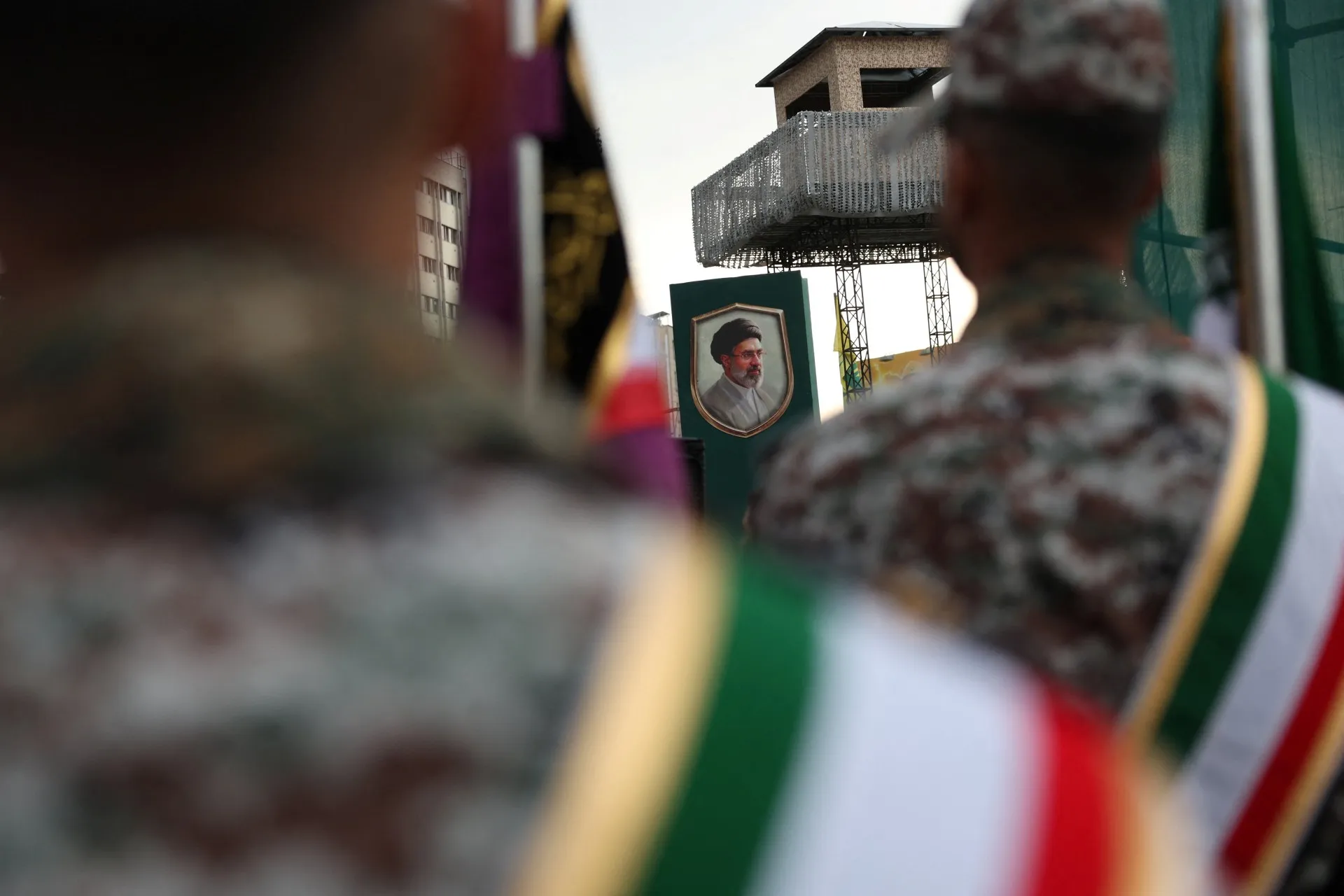
Opposition Iranian activists told Al-Hurra that the restructuring of the Iranian Armed Forces, recently launched by the Iranian Supreme Leader Mojtaba Khamenei, included the dismissal of dozens of officers and their replacement with former members of the Islamic Revolutionary Guard Corps (IRGC).Last August, Mojtaba appointed Ali Abdollahi, the commander of the Khatam al-Anbiya Central Headquarters, as Chief of the General Staff, and instructed him to complete the merger of the General Staff with the Khatam al-Anbiya Central Headquarters.The merger process, along with the dismissal decisions, raises questions regarding its motives and timing, as it comes while Iran faces severe military pressures and acute economic crises.The Iranian authorities impose strict security surveillance on the dismissed military personnel, preventing any communication with them. However, Al-Hurra reached out to informed activists who have private sources within both the regular Army and the Iranian Revolutionary Guard Corps.The activists stated that the first phase of the reorganization involved the discharge of dozens of officers and the deprivation of their entitlements, particularly those of Kurdish, Arab, and Azerbaijani origins.According to the activists, these individuals were discharged under charges including security negligence, squandering weapons and communication equipment, and leaking information, following investigations conducted by joint committees from the IRGC Intelligence and Army Intelligence.The activists added that interrogation sessions are still being conducted with the dismissed army officers inside bases where they are being detained for days.Al-Hurra spoke to the activists through intermediaries and was unable to independently verify all of their accounts, at a time when Iranian authorities do not announce investigations concerning their armed forces or security agencies.Last August, Mojtaba Khamenei had appointed a number of highly experienced military and security commanders, including officials who served for decades during his father's rule.According to sources who spoke to Al-Hurra, these decisions serve as a preemptive measure against any move that could threaten the stability of the regime.Salah Abu Sharif Al-Ahwazi, Secretary-General of the Democratic Popular Front of Ahwaz, told Al-Hurra that the IRGC is currently seeking to recall its veteran officers from the first and second generations back into service—considering them more loyal—and installing them in place of the expelled army officers.The reorganization process is closely linked to the complex trajectory of relations between Iran’s military wings since the 1979 revolution.The Khatam al-Anbiya Central Headquarters, established in 1984, is the main command center responsible for planning and directing major military operations.Following its founder, Hashemi Rafsanjani—who later assumed the presidency of Iran—a succession of IRGC commanders took over the leadership of the Khatam al-Anbiya Headquarters.The United States designates both the IRGC and the Khatam al-Anbiya Headquarters on its lists of terrorist organizations.In 2016, a decree by the former Supreme Leader Ali Khamenei mandated the restructuring of the Khatam al-Anbiya Headquarters to become an independent entity separate from the General Staff.On the other hand, the General Staff represents the highest military authority in Iran, answering directly to the orders of the Supreme Leader. Its duties include drafting defensive and offensive doctrines and defining military priorities.Kamal Abdul Karim, Deputy Secretary-General of the Arab Front for the Liberation of Ahwaz, believes that the primary goal of the merger decision is to end the duality of military command and to block the path against any mutiny or armed movement during times of crisis.According to Abdul Karim, the merger between the Khatam al-Anbiya Headquarters and the General Staff targets securing the future of the regime itself, rather than being just a mere military reorganization.Iranian authorities, according to opposition Iranian political and human rights activists who spoke to Al-Hurra, fear a popular explosion in light of the worsening economic crisis and the continuation of the war.According to these sources, many Iranian officers and soldiers were previously forced into retirement after refusing to execute orders to kill demonstrators during the protests that erupted in Iran at the end of last year.Farzin Karbasi, an Iranian activist residing in Iraqi Kurdistan, told Al-Hurra that bringing the branches of the Iranian Armed Forces together under a single operations room controlled by the IRGC is a major step toward confronting any popular movement or external attacks.The history of disputes between the IRGC and the regular Army dates back to 1979, when Khomeini decided, months after seizing power in Iran, to establish a parallel army to protect the new regime back then from any coup attempts.Over more than 47 years, the IRGC has gradually tightened its grip on senior leadership positions within the regular Army to prevent any attempt to overthrow the regime.According to what former Kurdish officers in the Iranian Army revealed to Al-Hurra in an investigation published last May, disputes between the IRGC and the regular Army escalated during the 40-day war fought by the United States and Israel against Iran.These sources indicated that Tehran, Tabriz, Isfahan, Kermanshah, Marivan, and Ahwaz witnessed clashes between the IRGC and the regular Army during the war, resulting in casualties on both sides.Al-Hurra was unable to verify these clashes from independent sources.There are no official Iranian statistics on the number of armed forces in Iran, but statistics from Iranian opposition figures show that the regular Army outnumbers the IRGC.However, the IRGC’s arsenal is more advanced than that of the regular Army, as the Revolutionary Guard controls the ballistic missile and drone programs, chemical and biological weapons industries, alongside the nuclear program. In contrast, the Iranian Army’s arsenal remains old and depleted.At the same time, the Basij paramilitary force, which is included on US terrorist lists, is linked to the IRGC and oversees the management of domestic security affairs.Strategic expert Alaa Al-Nashou told Al-Hurra that the regime's fear of an internal mutiny within the Army and the seizure of weapons prompted the IRGC to tighten its grip on the armed forces through these merger operations, aiming to thwart any movement against the authority, especially given the state of tension within the regular Army.